Bowl Game Watches: A Tradition in Time
Long before NIL deals and seven-figure transfer portals, bowl games handed athletes something tangible: a watch. Not a trophy you leave in a case—a wristwatch you could wear to class, to church, to the hometown parade. For decades, commemorative bowl game watches sat at the intersection of sports ritual, regional pride, and mid-century gift culture. They were practical trophies, and they still turn up at estate sales, pawn shops, and collector forums with stories baked into the casebacks.
The Origins of the Bowl Game Timepiece
College football's bowl system expanded through the twentieth century as postseason games became destination events—New Year's parties, tourism, radio then television audiences. Sponsors and organizers looked for keepsakes that felt premium without the fragility of silver platters. Wristwatches fit the moment: useful, personal, and customizable with logos, dates, and game names.
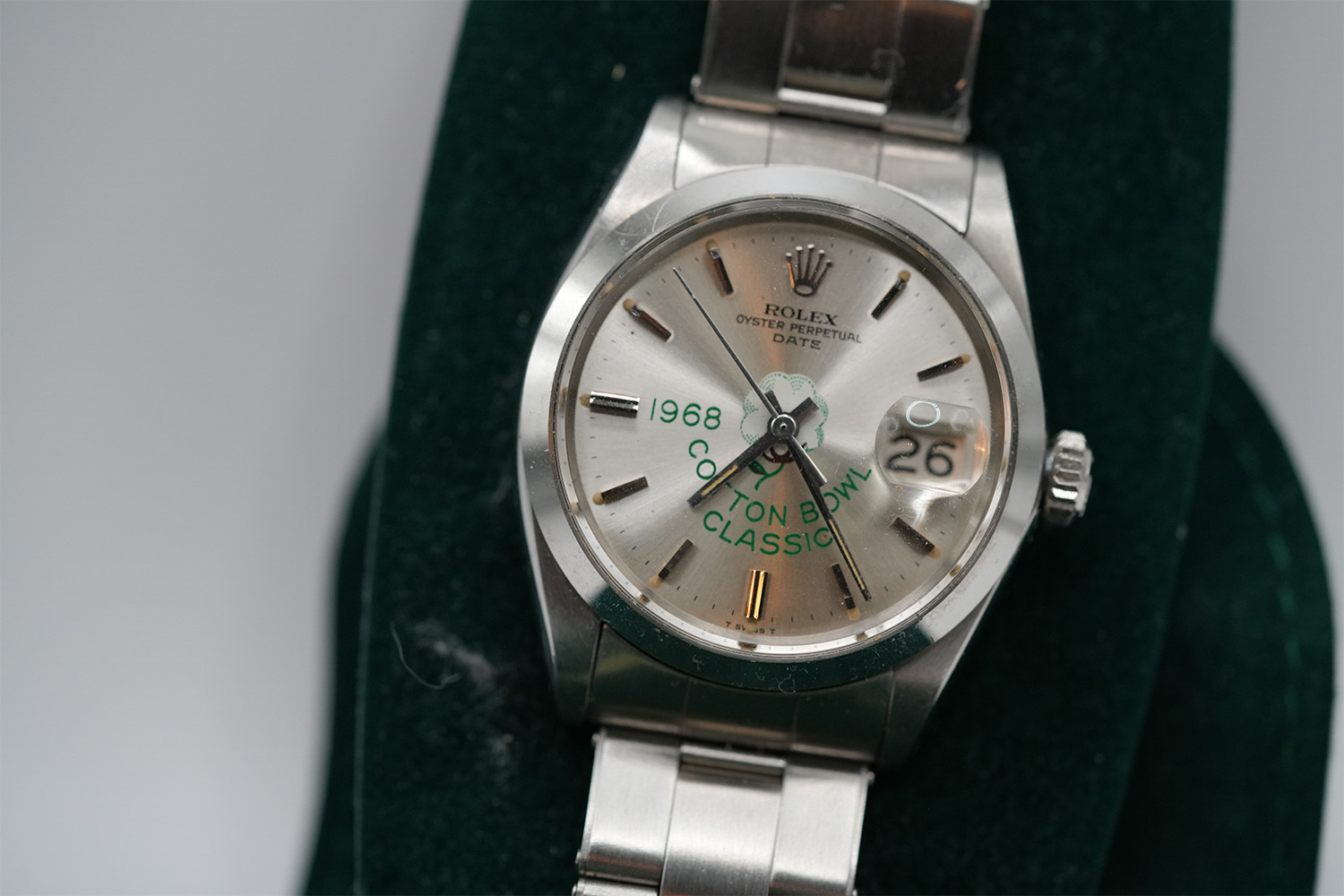
Jewelers and watch companies supplied the hardware. Brands you know—Rolex, Omega, Longines—and brands you have to Google supplied the rest. Game-specific dials, engraved casebacks, and "Participant" or "MVP" markings turned standard models into event artifacts. The practice peaked when mechanical watches were default graduation gifts anyway; a bowl watch was the deluxe version of something your uncle might already give you.
For decades, a wristwatch was more than a keepsake—it was a statement of achievement. As bowl games grew in prominence, so did the prestige of their commemorative timepieces.
Design Language and Evolution
Bowl game watches did not follow one template. Early pieces often favored sturdy steel cases, simple dials, and caseback engravings you could read without a loupe. As television money and sponsor logos reshaped the sport in the 1970s and 1980s, dials got busier—game names, conference marks, colorful printing, and branding that would make a modern minimalist wince.
- Early awards favored bold cases and engraved casebacks with game year and site
- 1970s–1990s emphasized logos, sponsor branding, and recognizable retail models underneath
- Modern pieces lean durable and legible, with commemorative details that read subtle on the wrist
Collectors learn to read the layer cake: base model, dial variant, caseback inscription, and whether the watch was player-issued or a staff gift. Two watches from the same game can differ dramatically in value depending on that provenance.
Cultural Impact and Collectability
Bowl game watches are Americana in steel. They connect regional bowl identities—Orange, Sugar, Cotton, Rose—to material culture you can hold. That is why collectors outside college football fandom still hunt them: they are entry points into vintage watches with built-in narratives.
When evaluating a piece, work through a short checklist:
- Provenance — Player-issued, MVP, coach, or staff gift? Documentation beats folklore.
- Logo and year specificity — Correct game, correct conference era, unaltered dial printing
- Completeness — Original box, papers, program, or ticket stubs that corroborate the story
Condition follows normal watch rules—dial moisture damage is common, and over-polished cases erase the soft edges that collectors want. Patina is acceptable; rust is not.
From Sideline to Showcase
What was once everyday wear is now showcase material. Forum posts, Instagram stories, and dealer listings revive names that only appear once a year on television. The best examples are worn lightly and stored honestly—not stripped and refinished into generic steel watches.
If you are new to the category, start with a game you know. Learn which brands supplied watches that year. Compare dial variants. You will quickly see why veterans love the hunt: every bowl season added another small edition to the archive.
Closing Thoughts
A bowl game watch is a wearable archive. It links a player, a team, a city, and a date on the calendar—ticking quietly long after the stadium lights go out. Whether you collect college football memorabilia or fine vintage watches, these pieces reward curiosity. The game ended decades ago. The watch is still keeping time.